
ESD Flooring
Performance-Based Specification
PIP designs and specifies ESD flooring systems for semiconductor, electronics, data-center, and mission-critical facilities.
Every flooring decision spans five critical categories: Finish, Exposure, Current Conditions, Environment, and Specialty Performance. PIP identifies the considerations relevant to your facility and rates the options against them, using our technical expertise.
Then the decision is yours, based on the two things only you can know: your risk tolerance and your capital spending strategy. Documented before you put the project out to bid.
30-minute working session with a TR53-credentialed engineer. No pitch.
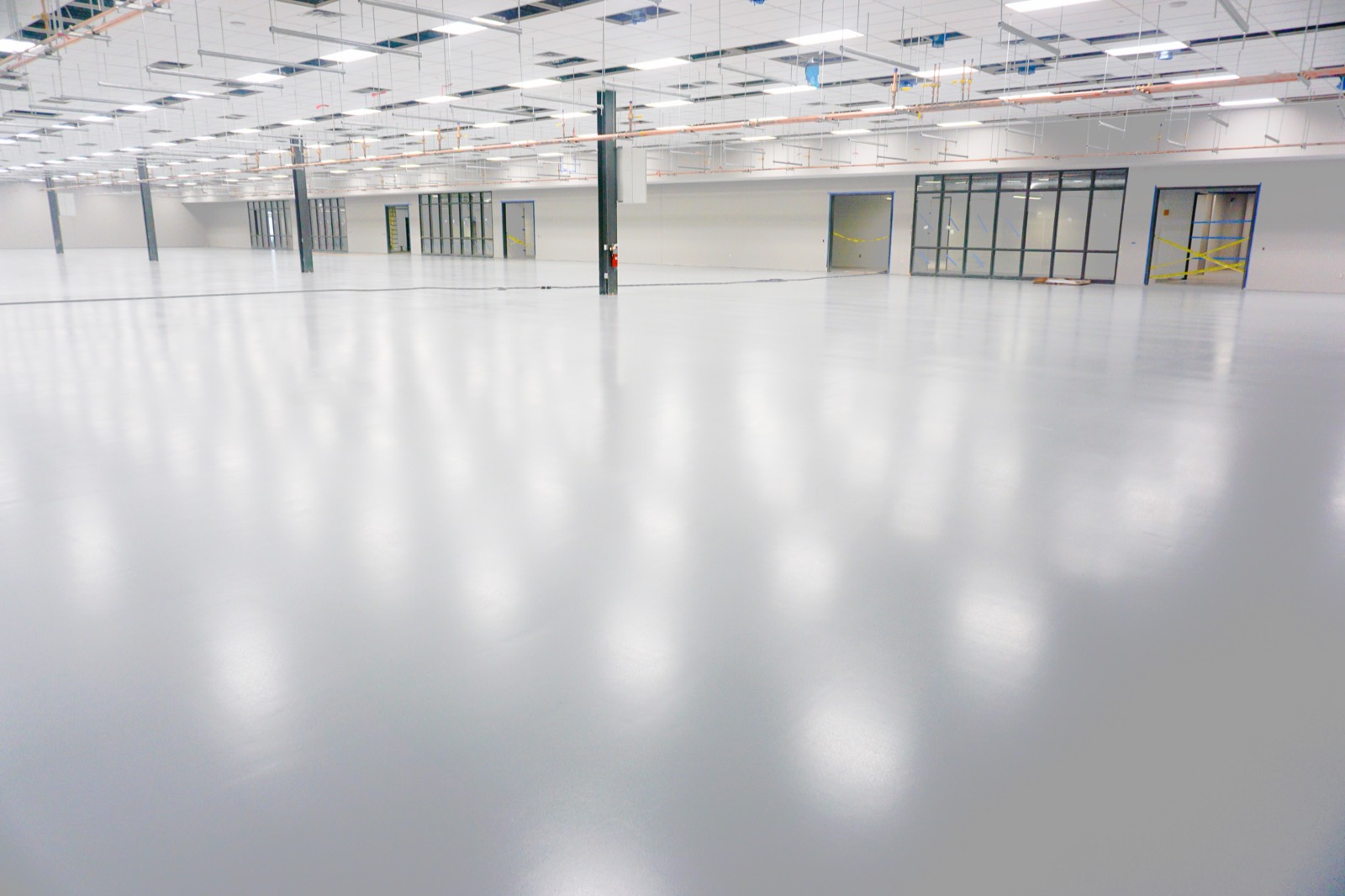
PIP ESD systems are installed through our contractor network into sites run by companies like these, across semiconductor, aerospace and defense, pharma, and advanced manufacturing.



































Each archetype is biased toward what they sell or what they install. PIP isn't on the same axis. Look at the bottom row.
| Product manufacturersSika, Sherwin-Williams, BASF, PPG | Turn-key contractorsStonhard | Specialty product co.StaticWorx, SelecTech | PIPConsultative Manufacturer | |
|---|---|---|---|---|
| Selling from | Their product line | What their crew installs | Their single category (ESD tile) | A documented decision framework, agnostic to product line |
| Spec methodology | Boiler-plate specs | Standard install package | ESD-only compliance lens | Polymer System Report (PSR) across five specification categories |
| Who's accountable when the spec is wrong? | The buyer. | The buyer. | The buyer. | The buyer, with a paper trail that names every decision and the logic behind it. |
"Every other manufacturer documents the product. PIP documents the decision. When something fails, the product spec rarely matters. The decision logic always does."
Four ways an ESD spec mistake shows up. Not one of them is on the product data sheet.
"Resistance passed. The audit didn't."
The ANSI/ESD S20.20 audit failed at the flooring interface. Resistance measurements passed in isolation, but the full grounding path was never documented or validated. Production halted pending corrective action.
The PSR decision this catches: grounding-path requirements verified before specification, not during the audit.
"Tools are offline. The line is dark."
The floor passed ANSI/ESD S20.20 compliance. After installation, the facility revealed a Body Voltage Generation (BVG) threshold the system was never designed to meet. Yield event triggered. Tools offline for 11 hours, at $80,000 per hour in lost production. The floor passed the audit. The specification missed the operational requirement.
The PSR decision this catches: BVG performance thresholds identified before specification and installation.
"It's not my fault. It's not their fault. The owner pays."
The lawsuit started after the failure. Contractor blames manufacturer. Manufacturer blames installer. Consultant blames maintenance. The owner inherits the shutdown, the replacement cost, and the legal invoices. Nobody can produce the original specification logic. Nobody can explain why the system was selected. The floor exists. The decision trail does not.
The PSR decision this catches: documented specification logic and responsibility alignment before installation.
"The low-cost option became the expensive option."
Three years after installation, the floor was replaced. The original specification compared install cost. It never documented lifecycle exposure, shutdown risk, or replacement timing. The board sees a $1.4M variance.
The PSR catches this before bid: lifecycle performance assumptions documented and approved before installation.
Industrial downtime averages $125,000 an hour (Siemens, 2024). Semiconductor and electronics downtime runs $30,000 to $100,000+ an hour. The floor decision is small. What lives on it isn't.
Every polymer system recommendation is shaped by findings across five major specification categories. The relevant findings change by facility, operation, exposure, and performance requirements.
PIP's methodology is designed to uncover what matters, what creates risk, and what must be documented before specification.
How the system needs to function and present at the surface level.
Gloss, branding and decorative requirements, color consistency, stain resistance, visible wear, reflectivity.
Slip resistance, cleanability, soil retention, wet vs. dry traction, maintenance impact of the texture profile.
UV exposure, hiding wear and scuffing, traffic visibility, appearance over time.
What the floor will be exposed to physically, chemically, and thermally.
What impacts, gouges, or abrades the floor: forklifts, AGVs, pallet jacks, point loading, rolling loads, vibration.
Acids, caustics, solvents, cleaners, sanitizers: frequency, duration, concentration, temperature, splash vs. immersion.
Washdown frequency, thermal shock and cycling, steam cleaning, hot process and cold storage, expansion stress.
What currently exists in or on the substrate.
Concrete defects, joints, cracks, spalling, delamination, surface profile, strength, flatness, structural movement.
Moisture, vapor transmission, contamination, oil saturation, chemical infiltration, previous moisture failures.
Existing coatings, adhesives, sealers, flooring systems, mastics, residues requiring removal.
How the operational environment affects installation and long-term performance.
Temperature and humidity during install and operation, ventilation and airflow limits, indoor vs. outdoor exposure.
Occupied or active production during install, limited access, equipment that must stay operational, noise and dust limits.
Downtime limits, shift-work windows, fast return-to-service, cure-time constraints, production restart deadlines.
Unique performance requirements tied to the facility or operation.
Static-control criticality, equipment-damage and ignition risk, required resistance ranges, ANSI/ESD S20.20, STM7.1 testing, TR53 validation, grounding strategy, transition-zone requirements.
Microbial growth concerns, seamless finishes, cleanability, sanitation expectations, frequent washdowns.
Chemical containment, waterproofing, crack bridging, UV stability, fire resistance, EMC-sensitive and mission-critical environments.
Once the relevant considerations are documented, PIP rates the system options against them, using our technical expertise.
Then the decision is yours, based on the two things only you can tell us: your risk tolerance and your capital spending strategy.
ESD is one finding inside one of five specification categories. Finish, exposure, current conditions, environment, and specialty performance all still have to be documented. The considerations are ours to uncover. The decision is yours to make.
Performance-Based Specification Methodology for Polymer Systems. One LU credit. The same framework that becomes the PSR, taught to the architects who write your spec.
Ohio-based since 2008. ESD, epoxy, urethane, cementitious. We engineer the system, document every decision, and stay at the table from first audit to final cure, with the contractor partner that fits your project. The specialization of independent with the convenience of turn-key.
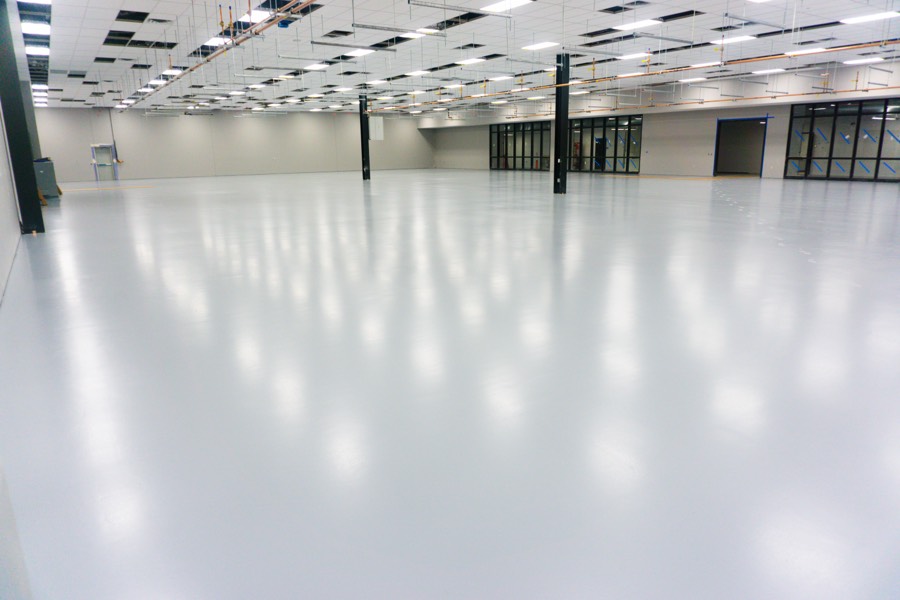
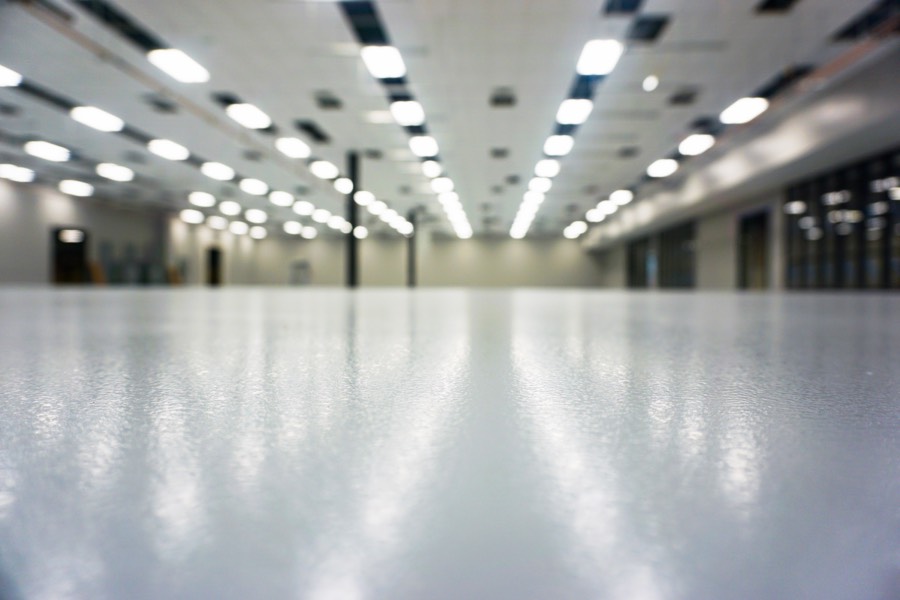
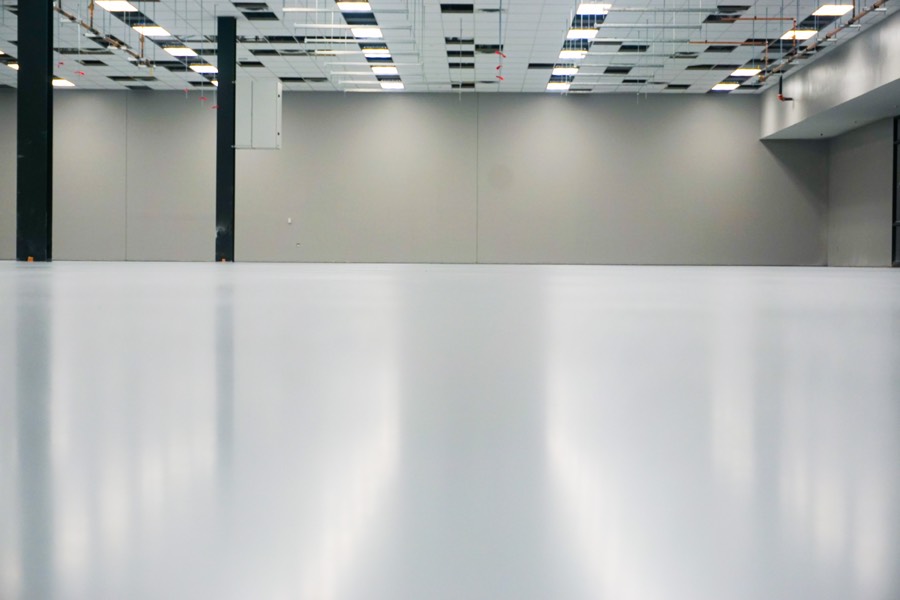
Electronics manufacturing facility, Wisconsin. ANSI/ESD S20.20 polymer system.
Have a spec? In 30 minutes we pressure-test it against the five categories before you go to bid. Don't have one yet? We map what your facility needs and you walk out with the considerations that matter, plus the AIA CEU + PSR template.
No pitch. You make the decision. We document the logic behind it.